Launch Sale: 50% Off All DIY Tools — Limited Time

Winery / Brewery / Distillery QBO Setup Kit

A chart of accounts that understands production costs, tasting room revenue, compliance, and distribution are four different animals.

QBO Setup Kit for Craft Beverage Producers - Setup Guide PDF cover
$47 $23.50 50% Off

Craft beverage businesses are among the most complex small businesses to keep books for, and the default QuickBooks chart of accounts is not even close to adequate. You are simultaneously a manufacturer, a retailer, a hospitality business, and a regulated entity. Your costs span raw materials, production labor, barrel aging, bottling, tasting room operations, wholesale distribution, wine club or taproom memberships, and compliance fees. If your chart of accounts does not reflect that complexity, your financial reports will not either.

This kit was built from bookkeeping work with wineries, and it applies to breweries and distilleries that share the same fundamental structure: you produce a product, you sell it through multiple channels, and you operate under industry-specific regulatory requirements. The chart of accounts includes 136-139 accounts because this industry genuinely needs that level of detail. Production costs are separated from tasting room expenses. Direct-to-consumer revenue is separated from wholesale and distribution revenue. Compliance costs (TTB, ABC, excise taxes) have their own categories. And your P&L is structured to show you gross margin by revenue channel, not just a single blended number.

If you have ever looked at your P&L and had no idea whether your tasting room is profitable or whether your production costs are in line, this kit exists to solve that problem.

What's Included

Everything you need to set up QuickBooks Online correctly for your craft beverage business.
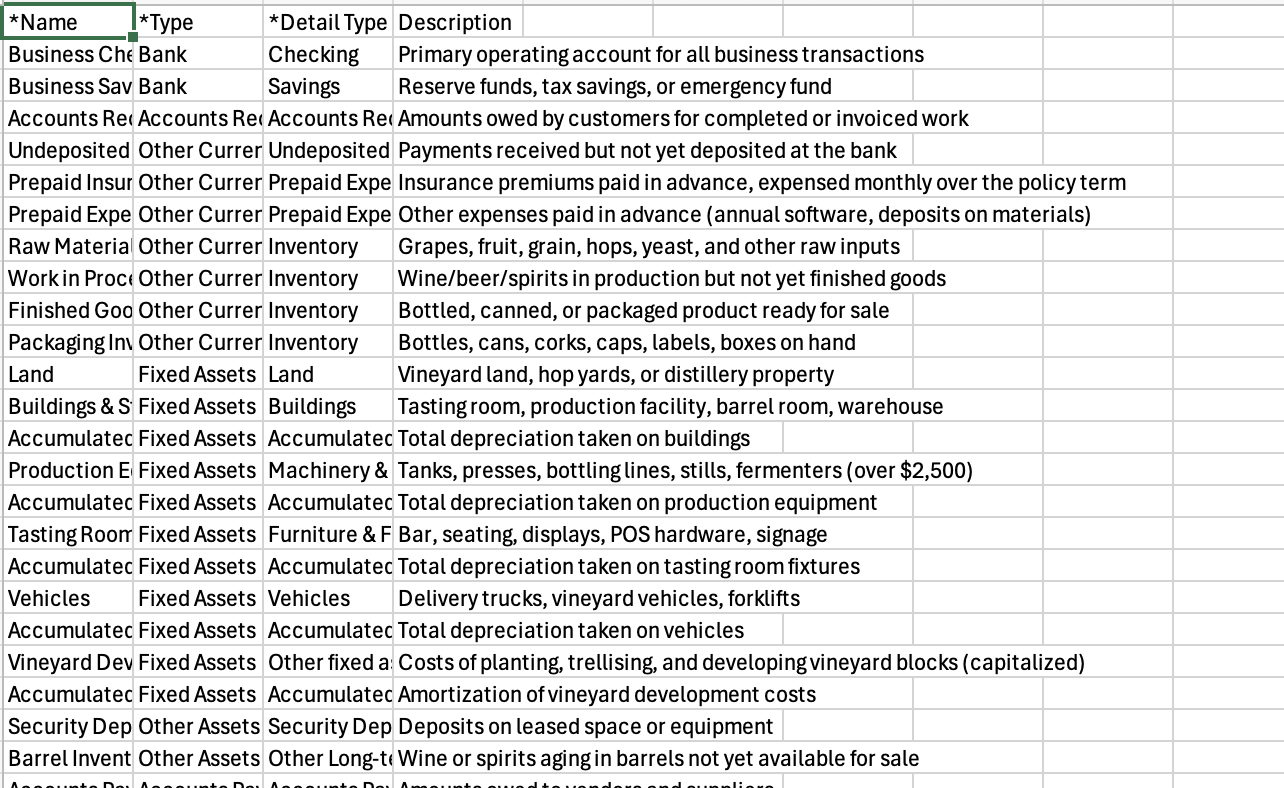
3 QBO-Importable CSV Files

One for each entity type: Sole Proprietor, S-Corp, and Partnership. Import directly into QuickBooks Online with 136-139 industry-specific accounts, the most detailed kit in the BalanceWise lineup.
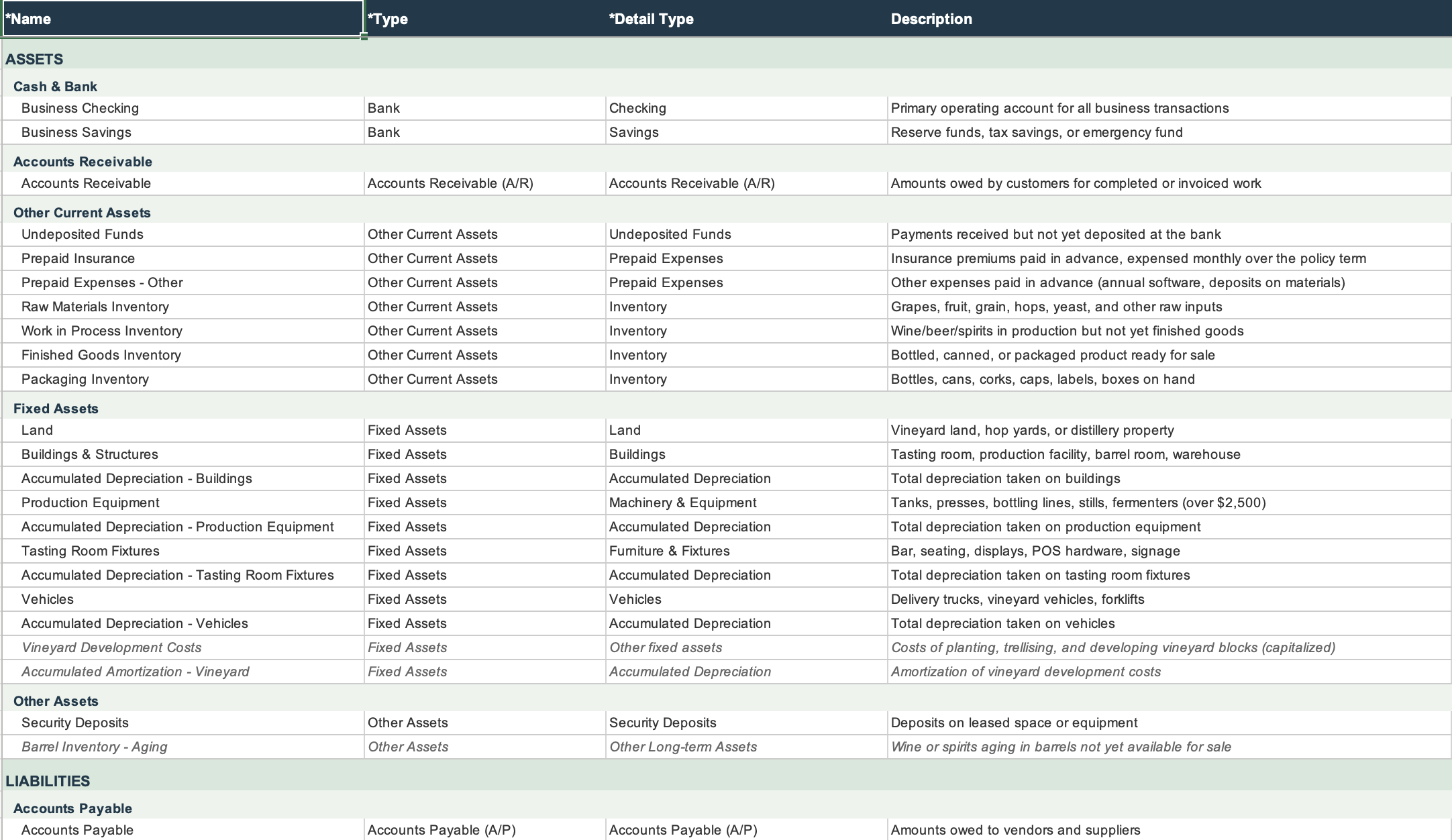
Winery Brewery Excel Reference Workbook preview

Excel Reference Workbook

Every account listed with its type, detail type, and description. This is particularly important for beverage producers because the account names and categories may be unfamiliar if you have been using a generic chart of accounts. The workbook explains what each account captures and when to use it.
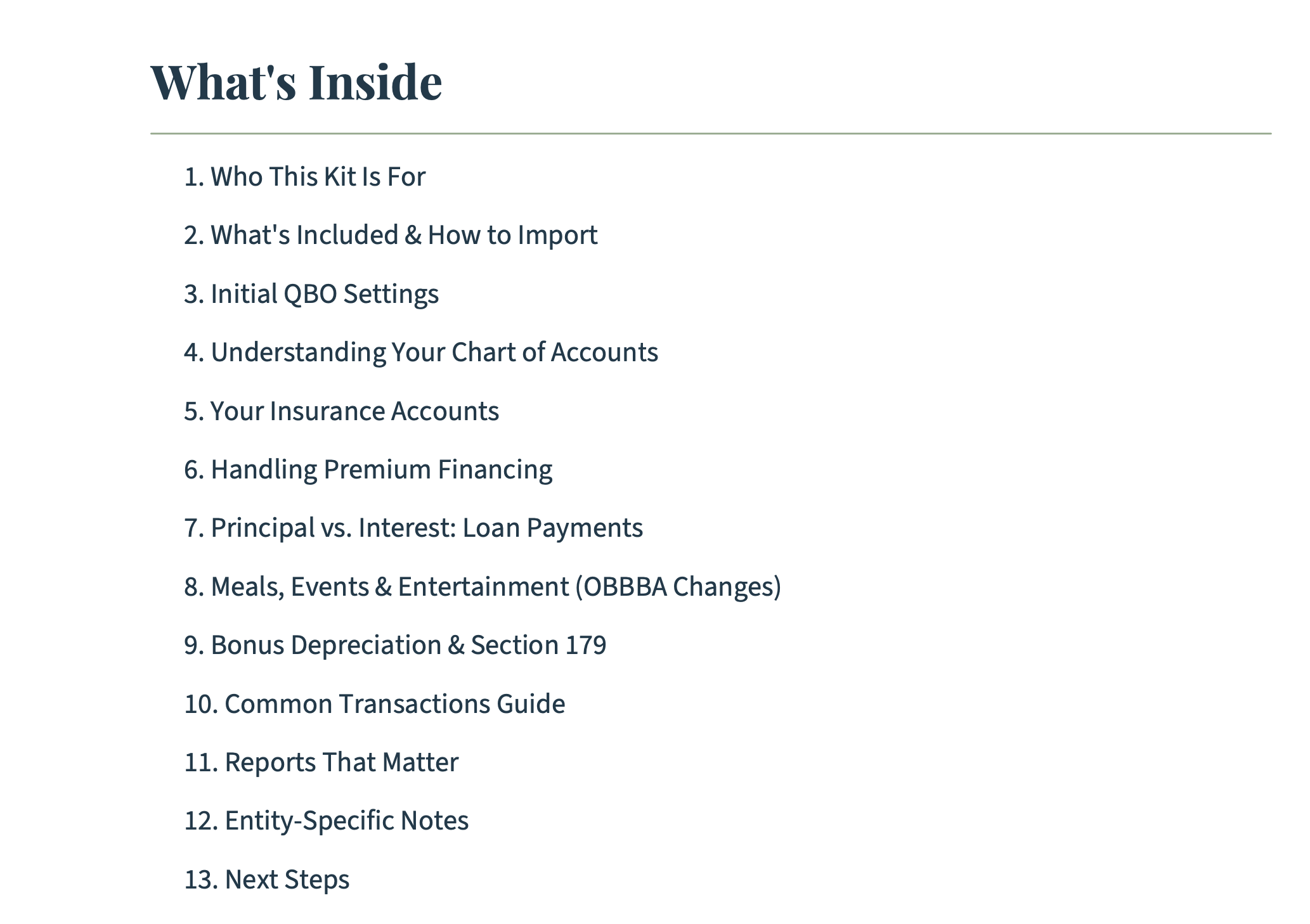
Setup Guide PDF (16-25 pages)

Step-by-step instructions for importing the CSV, customizing accounts for your specific operation (winery vs. brewery vs. distillery), and handling existing QBO data. Includes guidance on tracking production costs (raw materials, production labor, packaging, barrel and tank costs), recording tasting room and taproom revenue, handling wine club or mug club memberships, managing wholesale and distributor relationships, recording excise taxes and compliance fees, and capturing equipment purchases under current depreciation rules.
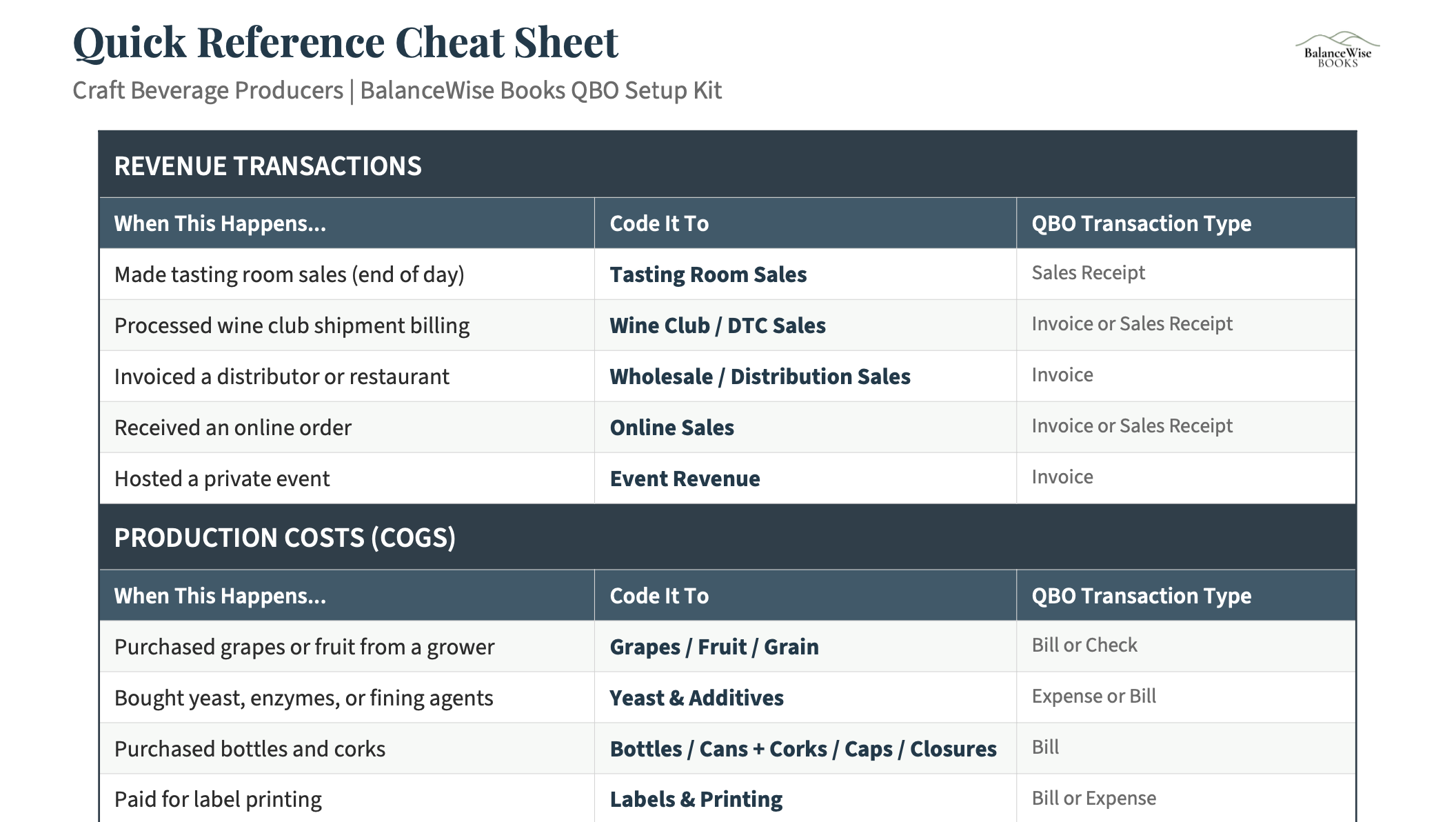
Quick Reference Cheat Sheet PDF (2-3 pages)

A printable reference for common craft beverage transactions: grape or grain purchases, yeast and additives, barrel purchases, bottling costs, tasting room sales, wine club shipments, distributor payments, excise tax payments, tasting room labor, event and hospitality expenses, and compliance fees. Each mapped to the correct account.

Who This Is For

This kit is built for craft beverage producers who use or are setting up QuickBooks Online.

Whether you are a small-production winery with a tasting room and wine club or a brewery with a taproom and wholesale distribution, the account structure covers the major revenue and cost categories for this industry.

What Makes This Different

It is not a generic template.

With 136-139 accounts, this is the most detailed kit in the lineup, and it needs to be. Craft beverage businesses have cost categories that do not exist in any other industry: grape or grain costs, fermentation supplies, barrel depreciation, excise taxes, compliance fees, tasting room labor, and wine club or taproom fulfillment. A generic chart of accounts forces all of that into "Cost of Goods Sold" and "Operating Expenses," which makes your reports useless for understanding where your money is actually going.

It is current with the 2025 tax law.

The OBBBA's restored 100% bonus depreciation is significant for beverage producers investing in tanks, barrels, bottling lines, and tasting room buildouts. Equipment you purchase and place in service now can be deducted in full in the first year. The expanded Section 179 limits ($2.5 million cap) provide additional flexibility for larger capital investments. And the permanent 20% QBI deduction benefits pass-through wineries, breweries, and distilleries going forward with no expiration. This chart of accounts has the asset and depreciation categories structured to capture these purchases correctly.

It separates your business by function.

Your tasting room is a different business from your production facility, which is a different business from your wholesale distribution operation. They have different margins, different cost structures, and different labor needs. This chart of accounts reflects that reality so your P&L can show you which parts of your operation are profitable and which need attention. Combined with QBO's class or location tracking (explained in the Setup Guide), you can run reports by channel and make decisions with actual data.

Ready to Set Up Your Books the Right Way?

Get a chart of accounts that actually makes sense for your craft beverage business. Import it into QBO in minutes.

$47 $23.50